About Me
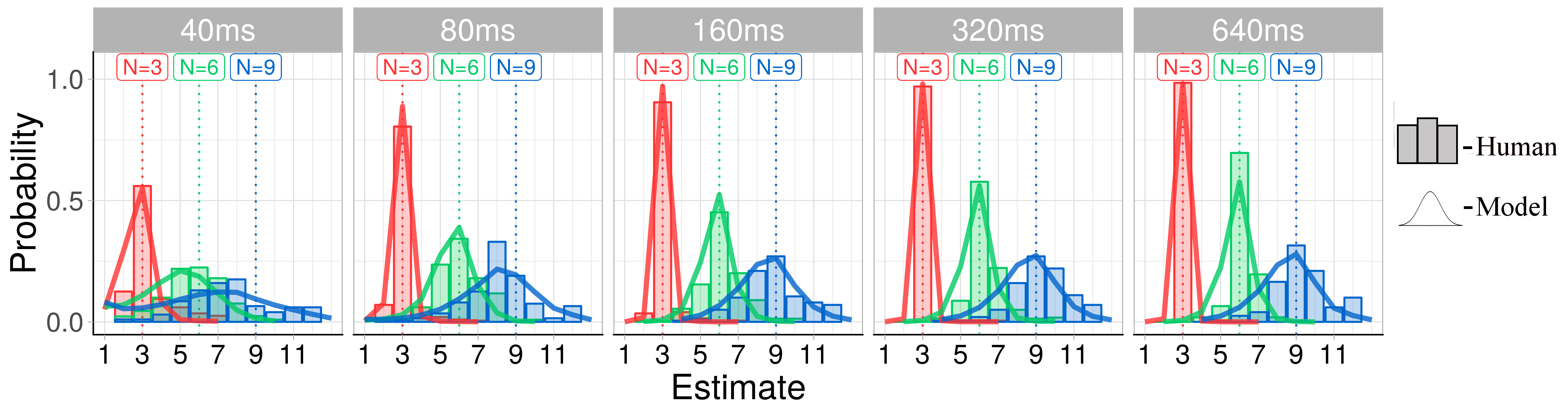
I am a researcher at MIT (CoCoSci) studying how people perceive, learn, and reason effectively given limited cognitive resources. I did my graduate work with Steve Piantadosi at UC Berkeley. My thesis work was aimed at understanding the mechanisms underlying visual numerosity perception. I've used behavioral experiments and computational models to link the visual information people gather from a scene to their ultimate perceptions of quantities. In one project, I showed that the psychophysics of number, including "subitizing" small quantities and Weber's law for larger quantities, reflects optimal inference under a limited informational capacity. See an explainer here. You can read a précis of my thesis here.
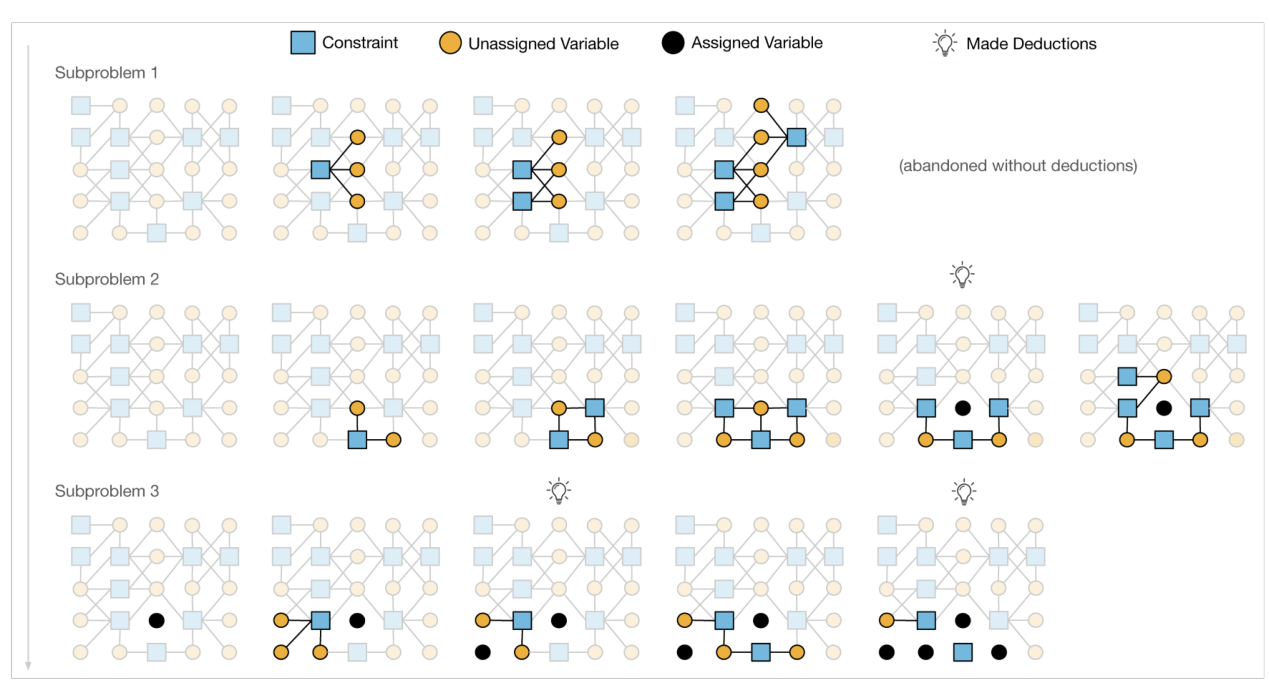
My recent projects explore how people learn geometric patterns, reason about physical systems, and actively seek information in ways that respect their cognitive limitations. One direction I am particularly excited about is modeling and experimentally testing how people reason in complex settings without holding many pieces of information in memory simultaneously. In an ongoing project, we developed CRUMB (Constraint Reasoning Under Memory Bounds), a model of how people solve constraint problems like Minesweeper by building small subproblems that fit within a fixed memory capacity. See an interactive explainer here.
Interests
- Bayesian & information-theoretic modeling
- Visual perception
- Numerical cognition
- Active information-seeking
- Concept learning
Education
- Postdoctoral Researcher, 2022-PresentMIT, Computational Cognitive Science Lab
- PhD in Psychology, 2016-2022UC Berkeley, Computation and Language Lab
- BS in Cognitive Science, 2012-2016Carnegie Mellon University
Project Highlights
Selected Publications
Adaptive, online subproblem construction explains how people reason about complex problems
Cheyette, S.J., Chen, T., Hofer, M., Callaway, F., Bramley, N., & Tenenbaum, J.B.
In preparation
Just-in-Time World Modeling Supports Human Planning and Reasoning
Chen, T., Cheyette, S.J., Allen, K.R., Tenenbaum, J.B., & Smith, K.A.
Under Review
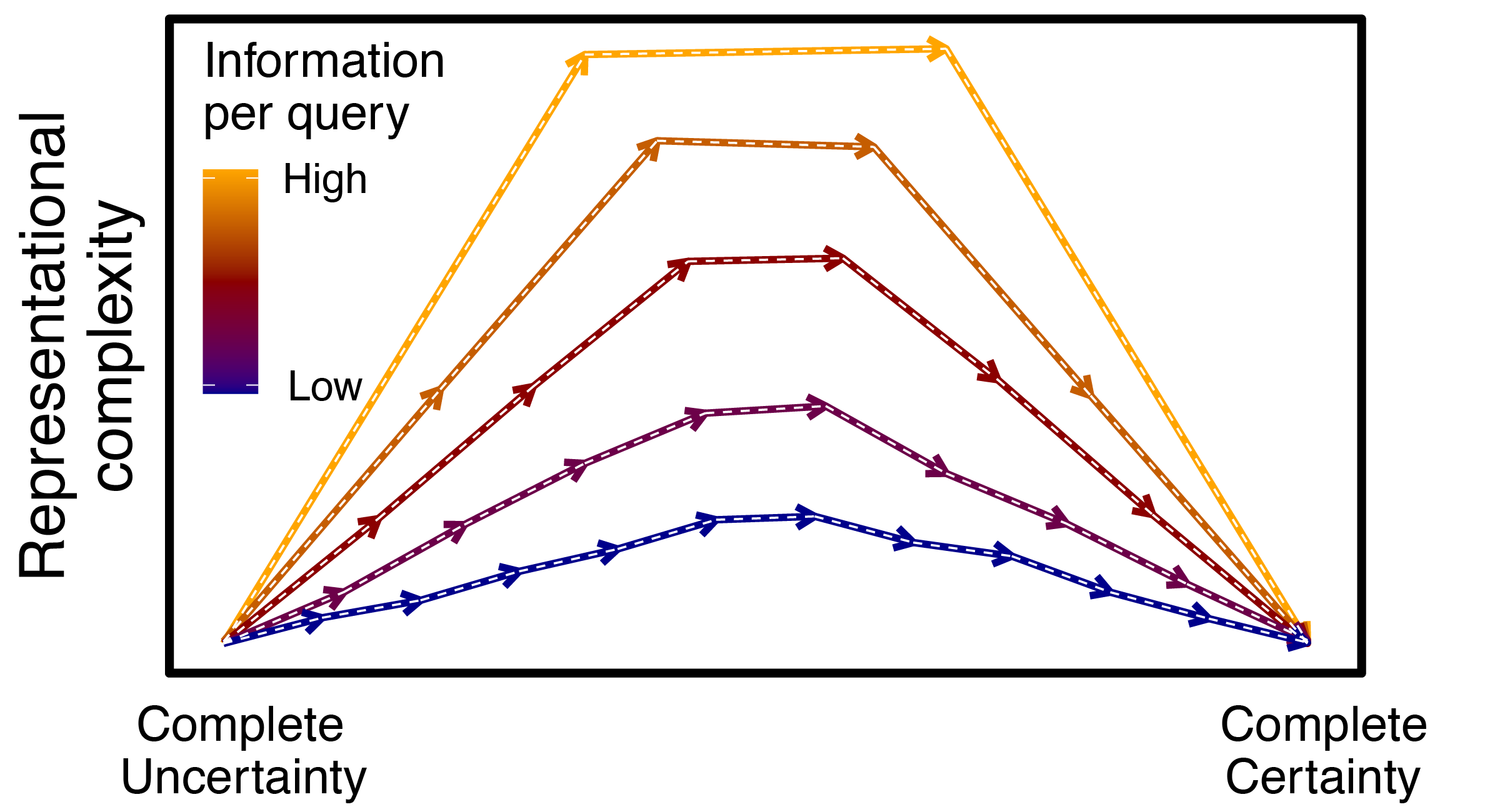
Human active learning trades off informativity and interpretability
Cheyette, S.J., Callaway F.L., Bramley N., Nelson, J., Tenenbaum J.B.
Under Review
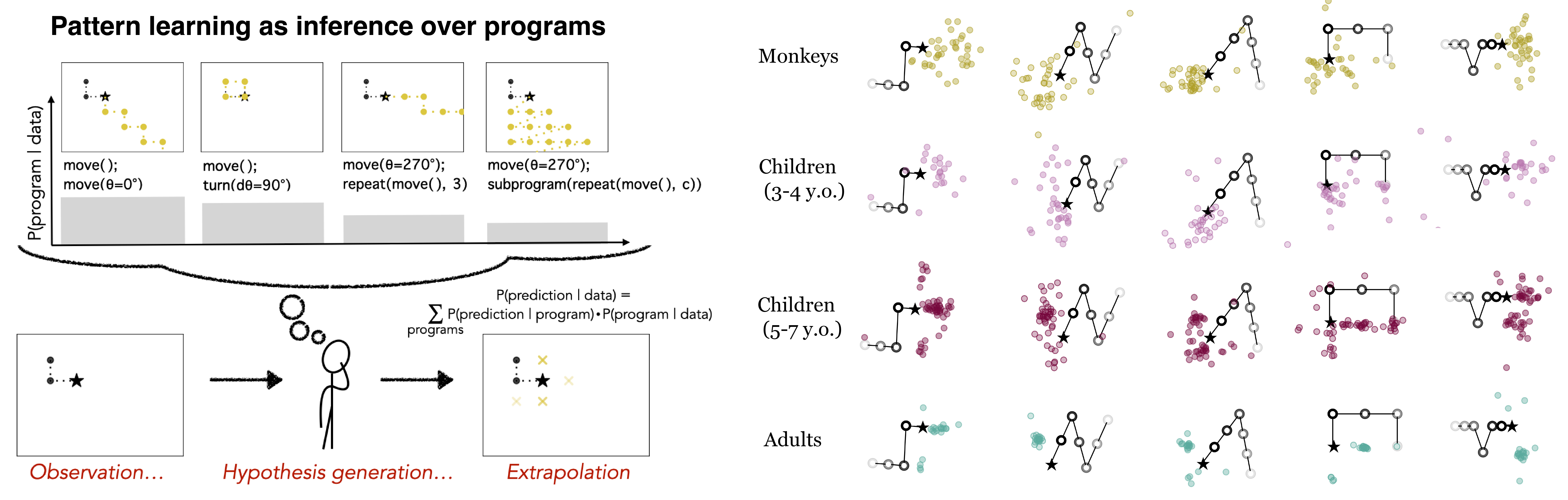
Spatiotemporal program learning in human adults, children, and monkeys
Mills, T., Coates, N., Silva, A.A., Ji, K., Ferrigno, S., Schulz, L.E., Tenenbaum, J.B., Cheyette, S.J.
Proceedings of the National Academy of Sciences (2026)Forthcoming
People use fast and flat simulation to reason about new games
Collins, K.M., Zhang, C., Wong, L., Barba, C.M., Todd, G., Weller, A., Cheyette, S.J., Griffiths, T., & Tenenbaum, J.B.
Nature (2026)
Longitudinal, self-directed gameplay as a window into the development of expertise
Cheyette, S.J., Chen, T., Hofer, M., Callaway, F., Bramley, N., & Tenenbaum, J.B.
Proceedings of the 48th Annual Cognitive Science Conference (2026)
Do humans use push-down stacks when learning or producing center-embedded structures?
Ferrigno, S., Cheyette, S.J., & Carey, S.
Cognitive Science (2025)
Decompose, deduce, and dispose: A memory-limited, metacognitive model of human problem-solving
Cheyette, S.J., Chen, T., Hofer, M., Callaway, F., Bramley, N., & Tenenbaum, J.B.
Proceedings of the 47th Annual Cognitive Science Conference (2025)
Limited information-processing capacity in vision explains number psychophysics
Cheyette, S. J., Wu, S., & Piantadosi, S. T.
Psychological Review (2024)
Response to difficulty drives variation in IQ test performance
Cheyette, S. J. & Piantadosi, S. T.
Open Mind (2024)
Spatiotemporal pattern learning as probabilistic program synthesis
Mills, T., Tenenbaum, J. B., & Cheyette, S. J.
Neural Information Processing Systems (2024)
A unified account of numerosity perception
Cheyette, S. J. & Piantadosi, S. T.
Nature Human Behaviour (2020)
Recursive sequence generation in monkeys, children, and native Amazonians
Ferrigno, S., Cheyette, S. J., Piantadosi, S. T., & Cantlon, J.
Science Advances (2020)
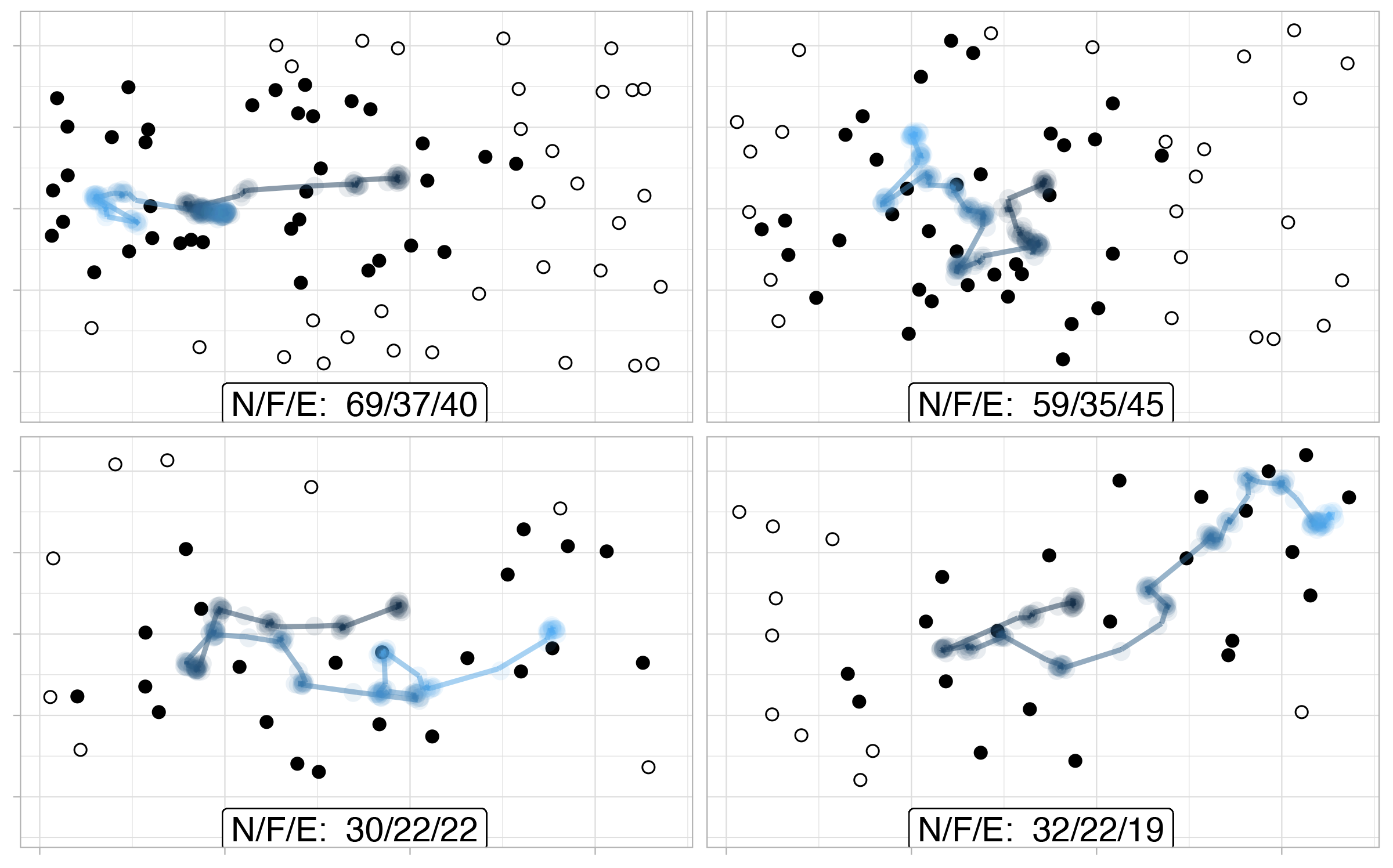
A primarily serial, foveal accumulator underlies approximate numerical estimation
Cheyette, S. J. & Piantadosi, S. T.
Proceedings of the National Academy of Sciences (2019)
Modeling the N400 ERP component as transient semantic over-activation within a neural network model of word comprehension
Cheyette, S. J., Plaut, D. C.
Cognition (2017)